A clear step-by-step guide to your Australian citizenship application: eligibility, documents, the test, the interview and the ceremony. Book a consultation with BYD.
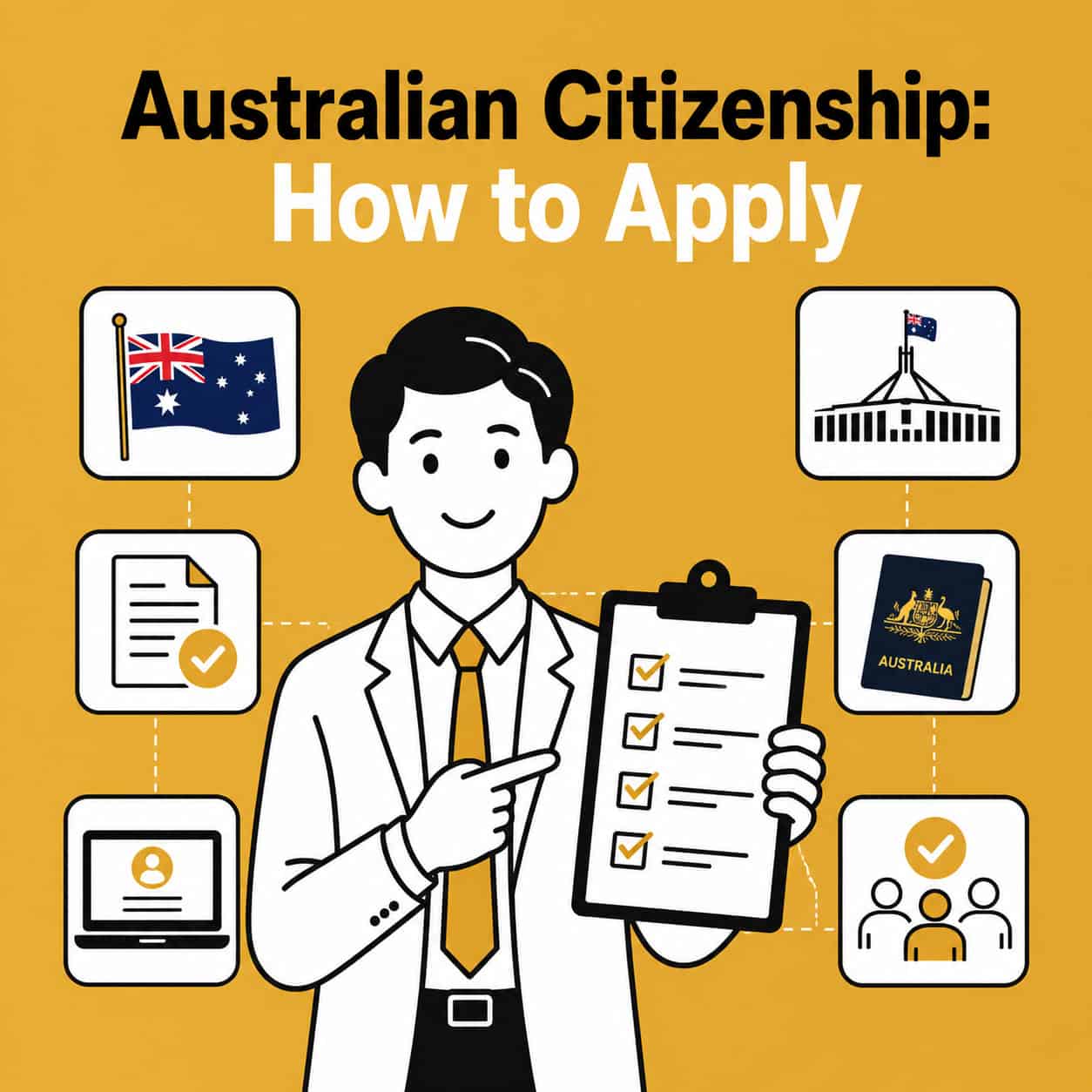
Most people apply for Australian citizenship by conferral. In short, you confirm you meet the residence requirement, gather your identity and residence documents, lodge the citizenship application online through your ImmiAccount, sit the citizenship test and interview if you’re in the standard age range, wait for a decision, and then make the pledge at a citizenship ceremony. You’re only a citizen once you’ve made that pledge. The whole thing is more paperwork than drama, but small errors on identity or the residence dates are the usual reason an application stalls.
This guide walks through each step in order, what you need at each one, and where people trip up. Our registered migration agents in Brisbane prepare these applications regularly, so we’ve flagged the parts that matter most.
Citizenship by conferral is the pathway for permanent residents who want to become citizens. To be eligible you generally need to:
There are other routes too. Citizenship by descent is for children born overseas to an Australian parent. Citizenship for a child born in Australia, and applications for newborns, follow their own forms and rules. New Zealand citizens living here have their own considerations depending on when they arrived and their visa history. If you’re not sure which route fits, that’s worth checking before you lodge anything.
You can apply once you actually meet the residence requirement, not before. This is the single most common mistake we see. People count from the wrong date, forget a long trip overseas, or assume time on a bridging or temporary visa counts the same as time as a permanent resident. It doesn’t always.
A useful habit is to map out every date you entered and left Australia over the past four years, and the date your permanent visa was granted. If you’ve spent more than the allowed time outside the country, or you haven’t yet completed twelve months as a permanent resident, your application can be refused or delayed. The Home Affairs residence calculator helps, but if your travel history is messy, get it checked.
Here’s the order of events for a standard conferral application.
1. Confirm your eligibility. Check the residence requirement against your real travel and visa history, and confirm your permanent residency is current. 2. Create or log in to your ImmiAccount. This is where the online citizenship application lives. Most applicants apply online rather than on paper. 3. Complete the application form. For conferral this is the relevant online form. You’ll enter your identity details, residence history, travel movements and character information. 4. Attach your documents. Identity, residence and supporting evidence go here. More on the document list below. 5. Pay the application charge and lodge. The government charges an application fee. Because fees change, confirm the current amount at the time you apply. insert current citizenship application fee from Home Affairs at publish date. 6. Sit the citizenship test and attend the interview. If you’re aged 18 to 59, you’ll usually be asked to sit the test and attend an appointment where your identity and documents are checked. 7. Wait for the decision. Processing times move around. We’ll give you a realistic timeframe for your situation rather than a number that dates quickly. 8. Attend your citizenship ceremony and make the pledge. You become a citizen at the ceremony, not before. Ceremonies are usually run by your local council.
The exact list depends on your situation, but most applicants need to cover three things: who you are, that you’ve lived here long enough, and your character. Typical documents include:
Documents in another language generally need an accredited English translation. Getting the identity set to line up cleanly is where careful preparation saves weeks.
If you’re in the standard age range, you’ll sit a computer-based test at a Home Affairs office. It covers Australia’s democratic beliefs, laws and government, and the responsibilities and privileges of citizenship, including a section on Australian values. You prepare from the official resource, and most people who study pass comfortably. At the same appointment, an officer checks your original identity documents, so bring the originals of what you uploaded.
If you don’t pass the first time, you’re usually given further chances to resit within your application. Applicants aged 60 and over, and some others, are generally not required to sit the test, though they still attend an appointment.
Plenty of straightforward applications can be done without help. It’s worth getting advice if your travel history is complicated, you’ve spent long stretches overseas, you have any criminal history or a character concern, your identity documents are inconsistent, or you’ve had a previous refusal. A refusal can affect future applications, so if there’s a real risk, it’s cheaper to get it right the first time. As registered migration agents we can assess your residence position, prepare the application, and deal with any character or evidence issue before it becomes a problem. You can read more on our Australian Citizenship page.
Most people apply online through their ImmiAccount for citizenship by conferral. You confirm you meet the residence requirement, complete the form, attach identity and residence documents, pay the charge, sit the test and interview if required, then make the pledge at a ceremony.
Once you meet the residence requirement, which generally includes at least twelve months as a permanent resident within four years of lawful residence in Australia. Holding PR alone isn’t enough if you haven’t completed the qualifying time.
Yes. Most conferral applications are lodged online through ImmiAccount. Some situations still use paper forms, and we’ll tell you which applies to you.
Identity documents such as your passport and birth certificate, a document with a current photo and signature, evidence of your residence and permanent visa, and police certificates if you’ve lived overseas for long periods. Foreign-language documents need accredited translations.
If you’re aged 18 to 59 you generally need to pass the test, which covers Australia’s laws, government and values. Applicants aged 60 and over are usually exempt but still attend an appointment.
There’s a government application charge that changes from time to time, so confirm the current figure when you apply. There may be extra costs for police certificates or translations. insert current fee at publish date.
It varies with your circumstances and departmental workload, from the time you lodge, through the test and interview, to the ceremony. We give clients a realistic estimate for their case rather than a fixed number.
Only when you make the pledge at a citizenship ceremony. Until then you remain a permanent resident, even after your application is approved.
There are separate pathways for children born in Australia and for newborns, and citizenship by descent for children born overseas to an Australian parent. Each has its own form, so check which one fits your family.
Australia allows dual citizenship, but whether you keep your original citizenship depends on that country’s laws, not Australia’s. Check with your home country before you assume you can hold both.
A refusal can affect future applications and may be reviewable in some cases. If you’ve been refused, or you think you’re at risk, speak to a registered agent quickly. See our Visa Refusal & Appeal page.
If you want your citizenship application done properly the first time, book a consultation with a registered migration agent at BYD. We’ll check your residence position, sort your documents, and guide you through the test and ceremony. Call 0434 893 901 or contact us online, and see our Australian Citizenship page for more.